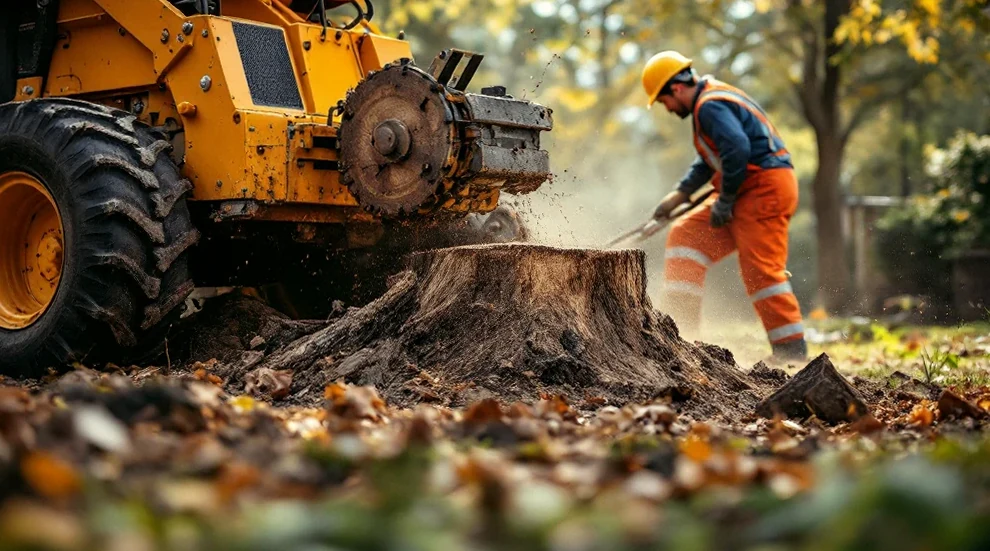
What is Stump Grinding & Removal and how does it work?
Stump grinding is cutting a stump down below ground level with a machine that chews the wood into mulch. Removal means taking the stump and major roots out entirely, leaving a clean hole you can fill with dirt. We handle both, depending on what you need for your yard.
When a tree comes down, the stump stays behind. It might look harmless, but it is a solid block of dead wood sitting in your lawn. Grinding solves that by using a rotating cutting wheel with carbide teeth to shave the stump down, usually to 6 to 12 inches below the surface. The result is a pile of wood chips and a hole you can fill and reseed.
Removal is a bigger job. We dig out the stump, the major roots, and the bulk of the wood, then haul it away. That leaves a clean area ready for planting or paving. Most Huntsville homeowners only need grinding, but removal makes sense when you want to put in a patio, a garden bed, or a fence line right where the tree was.
There is a third option, chemical rotting, but it takes months and leaves a mess. Grinding and removal are immediate and predictable. That is why we recommend them for almost every situation.
- Grinding lowers the stump below grade, so the lawn can grow over it.
- Removal takes out the stump and major roots, leaving a clean hole.
- Both beat chemical treatments that take months and leave wood underground.
Short version
- Grinding cuts the stump below ground, leaving chips and a hole.
- Removal digs out the stump and big roots, hauling the wood away.
- Grinding suits most yards; removal suits areas you want to build on.
How Stump Grinding & Removal works, start to finish
We start by inspecting the stump and the ground around it, then we bring in the right machine. Grinding takes an hour or two for a typical stump, and removal takes half a day or more depending on root spread. We clean up the chips and leave the site ready for you to use.
First, we look at the stump. We check for rocks, buried wire, or old fence posts that could damage the teeth. We also note how close the stump sits to your house, driveway, or sidewalk, because that changes how deep we can go and whether we need to protect those surfaces.
For grinding, we position the machine over the stump and lower the cutting wheel. The wheel spins at high speed and grinds the wood into fine chips. We work in a grid pattern, moving across the stump until it is below grade. Then we backfill the hole with the chips or haul them away if you prefer.
Removal is more involved. We dig around the stump to expose the main roots, then cut them with a saw or an excavator. Once the stump is free, we lift it out and load it onto a truck. The hole gets filled with clean dirt, and we tamp it down so it won't settle later.
Every job ends with a walk-around. We show you what is left, answer questions, and tell you how to care for the spot, whether that means seeding grass or waiting before planting something new.
- Inspection catches buried obstacles before they damage equipment.
- Grinding uses a carbide-toothed wheel to chew the stump below grade.
- Removal digs out the stump and roots, then fills the hole with clean dirt.
- We always clean up and leave the area ready for your next step.
- Call us for a site visit.We look at the stump, check for hazards, and give you a straight answer on grinding versus removal.
- We schedule the job.Most grinding jobs take a few hours, so we fit them around your day, not the other way around.
- We grind or remove.The machine does the heavy work, and we handle the cleanup, hauling chips or dirt as agreed.
- You get a usable yard.Fill the hole, seed it, or build on it. The stump is gone for good.
Why Stump Grinding & Removal matters for your home
A stump is more than an eyesore. It rots, attracts pests, and gets in the way of mowing and landscaping. Grinding or removing it protects your yard, your family, and your property value.
Left alone, a stump becomes a home for termites, carpenter ants, and beetles. Those pests do not stay in the wood; they move into your house when the stump runs out of food. In Huntsville's warm, humid climate, that process speeds up. Getting rid of the stump removes the food source.
A stump also makes mowing a pain. You have to trim around it, and the grass never grows right over the top. Over time, the wood rots and sinks, leaving a low spot that collects water. That water breeds mosquitoes and can undermine nearby pavement.
If you are selling your home, a stump in the front yard is a red flag. Buyers see it as deferred maintenance. Removing it is cheap compared to the discount they might ask for. Even if you are staying put, a clean yard is easier to enjoy and maintain.
Fresh cut, no rush
If the tree came down last week and the stump is small, you have time to decide. Just keep the area clear.
Signs of rot or pests
Soft wood, sawdust, or ants around the stump mean it is breaking down. That is when pests move in.
Stump near the house or walkway
Termites can travel from the stump to your siding. Remove it before they find a way in.
Common problems and what causes them
Most stump problems come from doing the job halfway: leaving the stump too high, leaving roots to rot, or using chemicals that take forever. We see these issues all the time, and they are easy to avoid with the right approach.
One common mistake is grinding only the top of the stump and leaving a raised ring. That happens when the machine is not run deep enough or when the operator rushes. The ring catches mower blades and looks worse than nothing. We always grind below grade to avoid that.
Another issue is leaving the roots. Even if the stump is gone, big roots can heave sidewalks or send up new shoots. That is why removal digs out the major roots, not just the visible part. If you only grind, you might see sprouts for a season or two, which is normal.
Chemical stump removers are a trap. They take months, smell bad, and still leave a hole. We have seen homeowners wait a year and then call us anyway. The cost of the chemicals plus your time is rarely worth it compared to a day of grinding.
- Raised rings happen when grinding stops short of grade.
- Leftover roots can sprout or heave pavement, so removal digs them out.
- Chemical removers are slow, smelly, and often need a follow-up grind anyway.
Frequently Asked Questions
How deep do you grind a stump?
We typically grind 6 to 12 inches below the surface, depending on the stump size and what you plan to do with the area. Deeper is better if you want to plant grass or build something, but we avoid going too deep near utilities or pavement.
Can you grind a stump close to my house?
Yes, but we take extra care. We inspect for foundation issues and use a machine that can reach tight spots. If the stump is right against the siding, we might grind it down and then hand-dig the rest to avoid damaging the house.
What do you do with the wood chips?
We can leave the chips in the hole as backfill, or we can haul them away. Leaving them is fine if you are reseeding, but if you want to plant a garden, we recommend removing them and filling with clean dirt.
How long does stump grinding take?
A typical stump takes 30 minutes to an hour of grinding time, plus setup and cleanup. A large stump with thick roots can take two hours or more. Removal takes longer because we dig out the roots.
Will grass grow back after grinding?
Yes, but you need to fill the hole with dirt and seed it. The chips alone do not make good soil. We often recommend mixing the chips with topsoil or removing them entirely for the best results.
Do I need to be home during the job?
Not necessarily, but we like to walk the site with you before we start. If you are not home, we can send you photos and a summary after we finish. Just let us know your preference when you book.
What if there are underground utilities near the stump?
We check for visible utility markers and ask you to locate any buried lines. If there is any doubt, we hand-dig around the area instead of using a machine. Safety comes first, and we will not risk cutting a line.
Is stump grinding messy?
There is some mess, but we clean up thoroughly. We rake the area, load the chips, and leave the yard tidy. You will see a hole and a pile of dirt if we fill it, but no scattered debris.
How much does stump grinding cost in Huntsville?
Costs vary with stump size, location, and access. Grinding a small stump runs less than a large one, and removal costs more than grinding. We give you a firm quote after seeing the stump, so you know the price before we start.
Can you grind a stump in the rain or mud?
We prefer dry ground because mud makes the machine slip and can tear up your lawn. If it rains the day of your appointment, we will reschedule for the next dry day. That keeps the job clean and safe.
Need stump grinding in Huntsville? Get a free estimate today.
📞 256-946-4625