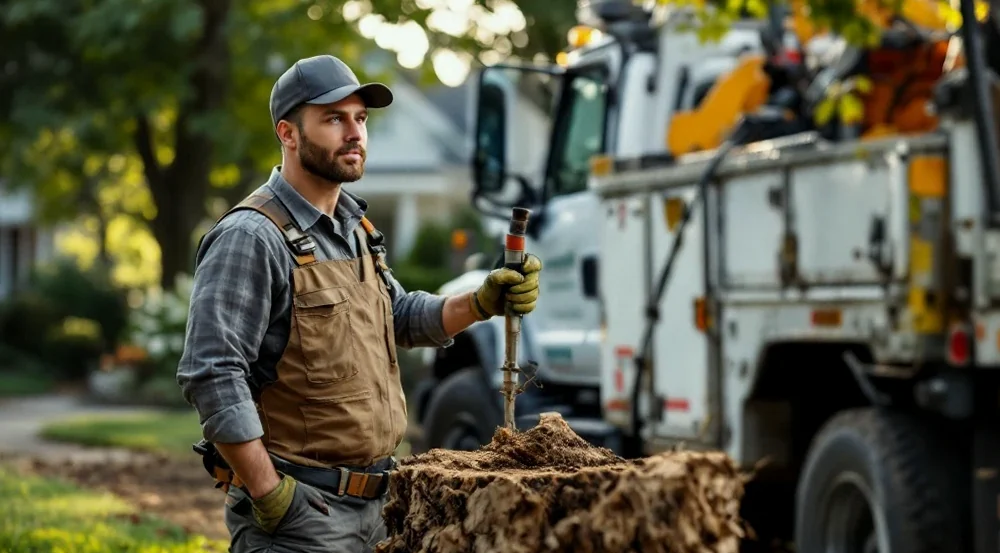
Quick answers on Stump Grinding in Huntsville
Most residential stumps in Huntsville run $100 to $350, depending on diameter and access. (dixielandtree.com) Small stumps start around $100, medium ones around $200, and large ones around $350. (dixielandtree.com) The only way to know your exact price is a quick on-site look.
We get calls every week from folks who just had a tree taken down and now have a stump sitting there like a wart on the yard. Or they bought a house and the previous owner left three stumps along the fence line. Either way, the questions are the same: how much, how long, and do you haul off the chips?
Here's how it works. We bring a grinder that chews the stump down to several inches below grade. You can top it with dirt and seed it, or leave the chips as a natural mulch pile. The machine does the heavy lifting, but access matters. A stump in the open front yard is quick. One tucked behind a shed with a narrow gate takes more time and usually costs more.
Pricing in Huntsville follows the size of the stump more than anything else. A small stump, say under 12 inches across, runs $100 or more. (dixielandtree.com) A medium stump, up to about 24 inches, is $200 or more. (dixielandtree.com) Large stumps, anything bigger, start around $350. (dixielandtree.com) Some companies quote a flat rate of $25 to $50 per inch of diameter. (dixielandtree.com) That per-inch figure lands on the higher end when the stump is hard to reach or the roots are thick.
If you're comparing numbers, know the difference between grinding and removal. Grinding typically runs $75 to $150, while full stump removal, which includes pulling the roots, runs $150 to $300. (huntsvilletreeremovalservice.com) Removal leaves a hole you can fill and plant in immediately, but it costs more and disturbs more yard. Grinding leaves the roots in the ground, which is fine for most people.
The best way to get a straight answer is to call us. We'll ask about the stump size, where it sits, and what you plan to do with the spot. Then we give you a firm number, not a guess.
- Small stumps: $100 or more (dixielandtree.com)
- Medium stumps: $200 or more (dixielandtree.com)
- Large stumps: $350 or more (dixielandtree.com)
- Flat rate option: $25 to $50 per inch (dixielandtree.com)
Short version
- Grinding costs $100 to $350 for most residential stumps. (dixielandtree.com)
- Size and access drive the price, not the tree species.
- We grind below grade so you can plant grass or a new tree.
- Chips stay unless you ask us to haul them.
What drives the price
Diameter is the big one, but access runs a close second. A stump in the open costs less because the grinder rolls right up to it. One behind a fence or on a slope means more setup time, and that shows up on the quote.
Let's walk through a couple of Huntsville scenarios. A 10-inch stump from a dogwood in the front yard, easy driveway access, that's a $100 job. (dixielandtree.com) A 30-inch oak stump in the backyard, with a gate that's 36 inches wide and a grinder that barely squeezes through, that's a $350 job or more. (dixielandtree.com) Same city, different ballgame.
Roots also matter. Some species, like sweetgum and silver maple, throw roots out sideways for feet. The grinder has to chew through those to get below grade, which adds time. We don't charge extra for root size unless it's extreme, but it's part of why a quote can feel higher than a neighbor's.
Cleanup is another variable. Some outfits grind and leave the chips in a pile. We ask what you want. If you want the chips spread over the hole, that's included. If you want them hauled off, there's a small fee for the trailer time. Most people keep them for mulch, which is free and works great around shrubs.
One thing that doesn't change the price much is the tree type. Pine, oak, maple, they all grind about the same. What changes is the diameter and how deep the roots run. A pine stump might be softer, but it's often bigger at the base. We price on what we see, not on species.
Worth it when
- You want to mow over the spot without hitting wood.
- You're selling and want the yard to look clean.
- You plan to plant a new tree or garden bed.
Hold off when
- You're fine with a natural stump as a planter or seat.
- A stump in an area you never use.
- You're on a tight budget and can wait a season.
Grinding versus full removal
Grinding chews the stump down below grade and leaves the roots. Removal pulls the whole root ball out. Grinding runs $75 to $150, while removal runs $150 to $300. (huntsvilletreeremovalservice.com) Most homeowners only need grinding.
Here's the trade-off. Grinding is faster, cheaper, and leaves less mess. The grinder turns the stump into sawdust in minutes. The roots stay underground and rot over years, which is fine unless you're planting something big right there. Removal digs out the root ball, leaving a hole you can fill with topsoil and plant immediately. It costs more because it takes more machine and more labor.
For most Huntsville yards, grinding is the right call. You get a flat, grass-ready surface. The roots that remain will decay, and you can plant a new tree a few feet away without trouble. If you want to put a patio or a driveway over the spot, removal is better, because settling roots can crack concrete later.
We've seen people pass on removal and regret it when they poured a slab. But that's a rare case. For 95% of our customers, grinding does the job. It's also easier on your yard, since we don't have to tear up a wide area to get the root ball out.
If you're comparing costs, remember that grinding is the budget option. Small tree removal, meaning the whole tree up to 30 feet tall, runs $800 to $1,500. (huntsvilletreeremovalservice.com) That's a different service. Stump grinding alone is a fraction of that.
Grind it unless you're building over the spot. Grinding is cheaper and leaves your yard mostly intact. (huntsvilletreeremovalservice.com)
What the job looks like from start to finish
We show up, walk the stump, roll the grinder into place, and chew it down. Most jobs take 30 to 60 minutes. We grind several inches below grade, then you're left with a pile of chips and a clean hole.
The grinder is a heavy machine, so we scout the path first. If there's a gate, we measure. If the ground is soft from rain, we might lay down boards to keep from rutting the lawn. That's the kind of detail that doesn't show up on a quote but saves you a headache later.
Once the grinder is in position, we lower the wheel and start sweeping side to side. The teeth chew the wood into chips that fly into a pile. We work down to about 6 to 8 inches below grade, which is deep enough to cover with dirt and seed. For larger stumps, we might take a few passes to get the depth right.
After the grinding, we rake the area clean and ask about the chips. Most people want them left as mulch. If you'd rather have them gone, we load them into the trailer and haul them off for a small fee. Either way, the spot is ready for topsoil and grass seed.
One thing we tell every customer: don't plant grass right on top of the chips. The chips rob nitrogen as they decompose, so the grass will look sick for a season. Either rake the chips away or mix them with soil and wait a few months.
- Walk the site.We check access, stump diameter, and root spread to give you a firm quote.
- Grind it down.The grinder chews the stump to below grade in 30 to 60 minutes.
- Clean up.We rake the area and either spread the chips or haul them off.
- You finish.Add topsoil and seed, or plant a new tree a few feet away.
Best time to grind in Huntsville
Any time the ground isn't frozen works. Spring and fall are busiest because folks are planting and cleaning up yards. We grind year-round, but call ahead in March and October if you want a quick slot.
Huntsville winters are mild enough that we grind all year. The ground rarely freezes solid, and even if it does, the grinder handles it. The bigger issue is mud. After a heavy rain, the yard gets soft, and the grinder can sink. We'll reschedule if it's too wet, but a little damp is fine.
Spring is the popular season because people are planting new trees and want the old stump gone first. Fall is second, as folks clean up before the holidays. If you call in April expecting next-day service, you might wait a week. Call in January and we can usually fit you in within a couple of days.
There's no wrong season for the stump itself. Grinding doesn't disturb much, and the hole fills in quickly. If you're planning to seed grass, do it in spring or fall for best germination. Summer heat makes new grass struggle, but the stump work is the same.
Spring
Busiest season. Book a week ahead. Good time to grind and reseed.
Summer
Hot but doable. Chips dry out fast. Water new grass well.
Fall
Second busiest. Great for planting new trees after grinding.
Winter
Easiest to schedule. Ground rarely frozen, but watch for mud.
Mistakes we see homeowners make
The biggest one is leaving the stump and hoping it rots. A pine stump takes 10 years to soften. Another is planting a new tree right on top of the old roots. Grinding first solves both.
Some folks think a stump will rot away on its own. It will, eventually, but not in your lifetime. A 20-inch oak stump can take 15 years to break down. In that time, it's a tripping hazard, a lawnmower killer, and a home for termites. Grinding is a one-day fix.
Another mistake is trying to burn the stump. We've seen charred holes in backyards and a few close calls with fences. Burning doesn't get the roots, and it's risky in a neighborhood. Grinding is safer and leaves no mess.
Then there's the DIY grinder rental. A homeowner rents a machine for $150 a day, spends six hours wrestling it, and still leaves a hump because they didn't go deep enough. A pro does it in under an hour and gets it below grade. The rental cost plus your time isn't a bargain.
Finally, don't ignore the roots. If you grind a stump but leave a big surface root, it'll still trip you up and ruin a mower blade. We grind the main stump and cut any exposed roots flush with the ground. That's part of the job.
A stump left to rot is a 15-year eyesore. Grinding turns it into a weekend project.
What to do after we leave
Fill the hole with topsoil, pack it down, and seed it. Or use the chips as mulch. Don't plant a new tree in the same spot for at least a year, because the old roots are still decomposing.
The hole left after grinding is usually 6 to 8 inches deep. Fill it with a mix of topsoil and the chips, or just topsoil if you want a clean surface. Pack it down firmly, then add grass seed and water. Within a few weeks, you won't know a stump was there.
If you're using the chips as mulch, spread them around shrubs or trees. They break down slowly and add organic matter. Just don't pile them thick against a tree trunk, which can trap moisture and cause rot.
If you want to plant a new tree, wait a year. The old roots are still breaking down, which can rob nitrogen and cause the new tree to struggle. After a year, dig a fresh hole a few feet away, and you're set.
One more thing: keep an eye on the spot after heavy rain. The soil might settle as the roots decay. Add more topsoil and seed if you see a dip. That's normal and easy to fix.
Frequently Asked Questions
How much does stump grinding cost in Huntsville?
Most residential stumps run $100 to $350, depending on diameter and access. (dixielandtree.com) Small stumps are $100 or more, medium ones $200 or more, and large ones $350 or more. (dixielandtree.com) A flat rate of $25 to $50 per inch is also common. (dixielandtree.com) The only way to get an exact figure is a quick on-site quote.
Is stump grinding cheaper than stump removal?
Yes. Grinding typically runs $75 to $150, while full removal runs $150 to $300. (huntsvilletreeremovalservice.com) Grinding leaves the roots in place, which is fine for most yards. Removal pulls the root ball out and costs more.
How deep do you grind a stump?
We grind down to about 6 to 8 inches below grade. That's deep enough to cover with topsoil and grass seed. The exact depth depends on the stump size and what you plan to do with the area.
Do you haul away the wood chips?
We can, for a small fee. Most customers keep the chips to use as mulch. If you want them gone, we load them into our trailer and haul them off. Just tell us what you prefer.
Can I plant a new tree where the stump was?
Wait at least a year. The old roots are still decomposing and can rob nitrogen from the new tree. After a year, dig a fresh hole a few feet away from the original spot.
How long does stump grinding take?
Most residential stumps take 30 to 60 minutes. Larger stumps with thick roots can take longer. We'll give you a time estimate when we quote the job.
Will stump grinding damage my lawn?
There will be some chips and a small hole, but we rake the area clean. The grinder can leave tracks if the ground is soft, but we use boards to minimize that. After we're done, you just add topsoil and seed.
Do I need to be home for the grinding?
It helps if you're there to show us the stump and answer questions. If you can't be, we just need access to the yard and a clear spot to work. We'll text you when we're done.
What if the stump is near a fence or a house?
We can grind close to structures, but we're careful. The grinder has a precise arm, and we'll hand-dig around obstacles if needed. Access might affect the price, but it's not a dealbreaker.
Do you grind roots that stick up?
Yes, we cut exposed roots flush with the ground as part of the job. That prevents tripping hazards and protects your mower blades.
Sources
Need stump grinding in Huntsville? Get a free estimate today.
📞 256-946-4625